

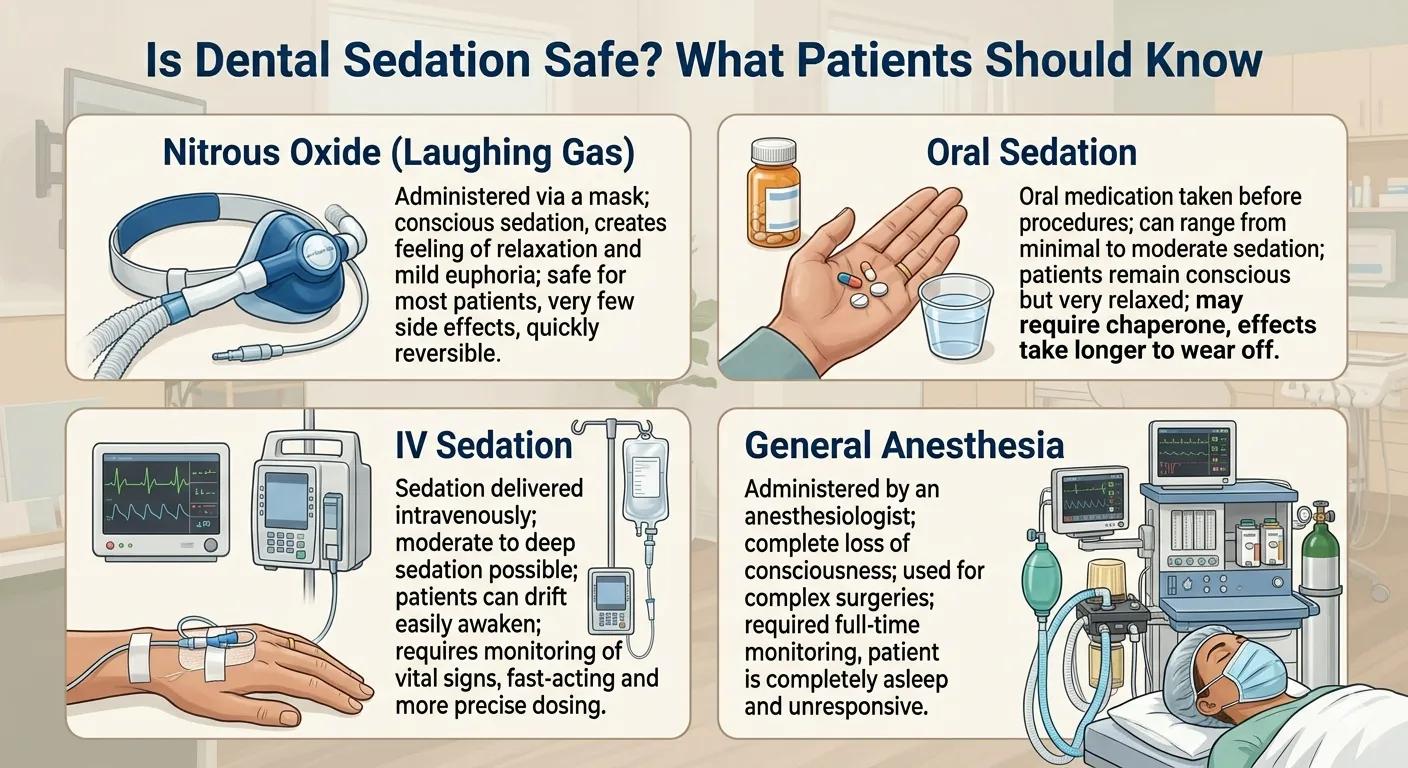
Dental sedation improves patient comfort and reduces procedural anxiety. Dentists use controlled medications to relax patients during treatment. Safety depends on patient health, sedation type, and clinical monitoring protocols. You will learn safety factors, risks, and expert insights next.
What is dental sedation and how does it work?
Dental sedation uses medication to reduce pain perception and anxiety during procedures. It affects the central nervous system and induces relaxation or drowsiness.
Common mechanisms include:
Depresses brain activity to reduce fear signals
Relaxes muscles to limit physical tension
Alters memory formation to reduce procedural recall
Dentists select sedation based on procedure complexity and patient profile.
What types of dental sedation exist?
Dental sedation includes multiple levels, each with distinct safety profiles and effects.
Nitrous oxide sedation reduces anxiety through inhalation
Oral sedation uses prescribed pills to induce calmness
IV sedation delivers medication directly into bloodstream
General anesthesia induces full unconsciousness for complex cases
Nitrous oxide shows the lowest risk profile. General anesthesia requires strict monitoring.
Is dental sedation safe for most patients?
Yes, dental sedation is safe when trained professionals follow clinical guidelines and patient screening protocols.
Safety depends on:
Medical history accuracy
Dosage precision
Continuous monitoring of oxygen, heart rate, and blood pressure
The American Dental Association supports sedation when providers meet certification standards. Risks increase without proper assessment.
Who is a good candidate for dental sedation?
Patients with anxiety, low pain tolerance, or complex procedures benefit most from sedation.
Common candidates include:
Patients with dental phobia
Patients requiring long or invasive treatments
Patients with strong gag reflex
Patients with special healthcare needs
Dentists evaluate contraindications such as respiratory conditions or medication interactions.
What are the risks and side effects of dental sedation?
Dental sedation presents mild to moderate risks depending on sedation depth and patient condition.
Common side effects include:
Drowsiness lasting several hours
Nausea or mild dizziness
Temporary confusion or memory gaps
Rare complications include:
Respiratory depression
Allergic reactions
Proper monitoring reduces serious risks significantly.
How do dentists ensure sedation safety?
Dentists apply standardized safety protocols before, during, and after sedation.
Key safety steps include:
Reviewing full medical history and medications
Measuring baseline vital signs
Using calibrated dosing equipment
Monitoring oxygen saturation and heart rate continuously
Emergency preparedness also improves safety outcomes.
What does expert care look like at Highland Vista Dentistry of Georgetown?
Dr. Athena Hamidzadeh applies patient-centered care and evidence-based sedation practices.
She ensures safety by:
Designing individualized treatment plans
Using gentle communication to reduce anxiety
Monitoring patients closely during procedures
Adjusting sedation levels based on patient response
Her education from the University of Texas at Houston strengthens clinical precision.
How should you prepare for dental sedation?
Preparation improves sedation safety and reduces complications.
Follow these steps:
Avoid food and drink 6–8 hours before deeper sedation
Arrange transportation after the appointment
Share full medical history with your dentist
Follow medication instructions precisely
Preparation reduces adverse reactions and improves recovery speed.
What happens after dental sedation?
Recovery varies based on sedation type and patient metabolism.
Typical recovery patterns include:
Alertness returns within minutes for nitrous oxide
Drowsiness persists for hours after oral or IV sedation
Coordination and judgment remain impaired temporarily
Patients should avoid driving or operating machinery after sedation.
A general perspective on dental sedation
“Safety in medicine depends not only on the treatment itself but on the precision, preparation, and care behind it.”
This principle applies directly to dental sedation. Clinical expertise and patient cooperation determine outcomes. You will now see key patient concerns addressed.
Can dental sedation cause long-term effects?
No, dental sedation does not cause long-term effects in healthy patients when used correctly.
Medications metabolize quickly and exit the body within hours. Persistent complications occur rarely and usually involve pre-existing conditions or improper dosing.
Why should patients trust modern dental sedation?
Modern dental sedation uses advanced monitoring technology and standardized protocols. Research shows high safety rates when certified professionals administer sedation.
At Highland Vista Dentistry of Georgetown, Dr. Athena Hamidzadeh integrates experience, empathy, and precision to ensure patient safety and comfort.